
Most car owners treat the question “how does it work?” as a philosophical one, but for a shade-tree mechanic, it’s a literal parts diagram and a 14mm socket. You’re not wondering about the theory of internal combustion; you need to know how the coolant bypass valve on a 2014 Ford F-150 5.0L (Part #9L8Z-18591-A) actually fails and why replacing it with a Dorman 47087 saves you $40 but might not last through two Ohio winters. This guide cuts the grammar lessons and dictionary definitions—those top search results are useless when you’ve got oil on your knuckles. We’re going under the hood, into the drivetrain, and through the electrical system with torque specs, OEM numbers, and the gritty details the factory manual assumes you already know.
Car Parts Buyer's Checklist
OEM vs aftermarket decision guide, compatibility lookup tips, and money-saving strategies for auto parts.
| Pick | Best for |
|---|---|
| The Core Combustion Process: Air, Fuel, Spark, Repeat | Forget the textbook four-stroke cycle for a second. |
| Getting Power to the Pavement: The Drivetrain Breakdown | The engine makes power, but the drivetrain decides what to do with it. |
| The Electrical Nervous System: From Battery to Spark | Your car’s electrical system isn’t just for the radio. |
| Cooling and Lubrication: The Lifeblood Systems | An engine is a metal furnace that will weld itself together in minutes without constant co… |
| Steering, Suspension, and Brakes: The Control Trio | Power steering, brakes, and suspension are about translating your input into controlled ve… |
| Common Failure Points and the “While You’re In There” Jobs | Proactive maintenance is about combining jobs to save on labor. |
8 min read
In This Article
- The Core Combustion Process: Air, Fuel, Spark, Repeat
- Getting Power to the Pavement: The Drivetrain Breakdown
- The Electrical Nervous System: From Battery to Spark
- Cooling and Lubrication: The Lifeblood Systems
- Steering, Suspension, and Brakes: The Control Trio
- Common Failure Points and the “While You’re In There” Jobs
- OEM vs. Aftermarket: When to Pay for the Logo
- Torque Specs: Your Wrench’s Best Friend
- When to Call a Professional
Key Takeaways
- The Core Combustion Process: Air, Fuel, Spark, Repeat
- Getting Power to the Pavement: The Drivetrain Breakdown
- The Electrical Nervous System: From Battery to Spark
- Cooling and Lubrication: The Lifeblood Systems
The Core Combustion Process: Air, Fuel, Spark, Repeat
Forget the textbook four-stroke cycle for a second. From the driver’s seat, your engine works by managing three precise invasions: air, fuel, and spark. The mass airflow sensor (like Bosch 0280218004 for many GM trucks) measures incoming air grams per second. The fuel injectors (often Delphi FJ10007) pulse open for milliseconds, spraying a fine mist. The ignition coil (say, a Standard Motor Products LX323) transforms 12 volts into 30,000 to fire the plug. The magic is in the timing. If the crankshaft position sensor (Acdelco 213-4511) is off by three degrees, you’ll feel a hesitation. If the fuel pressure drops below 55 PSI at the rail on that F-150, it’ll stumble under acceleration. It’s a violent, controlled explosion happening hundreds of times per minute, and every sensor is a referee.
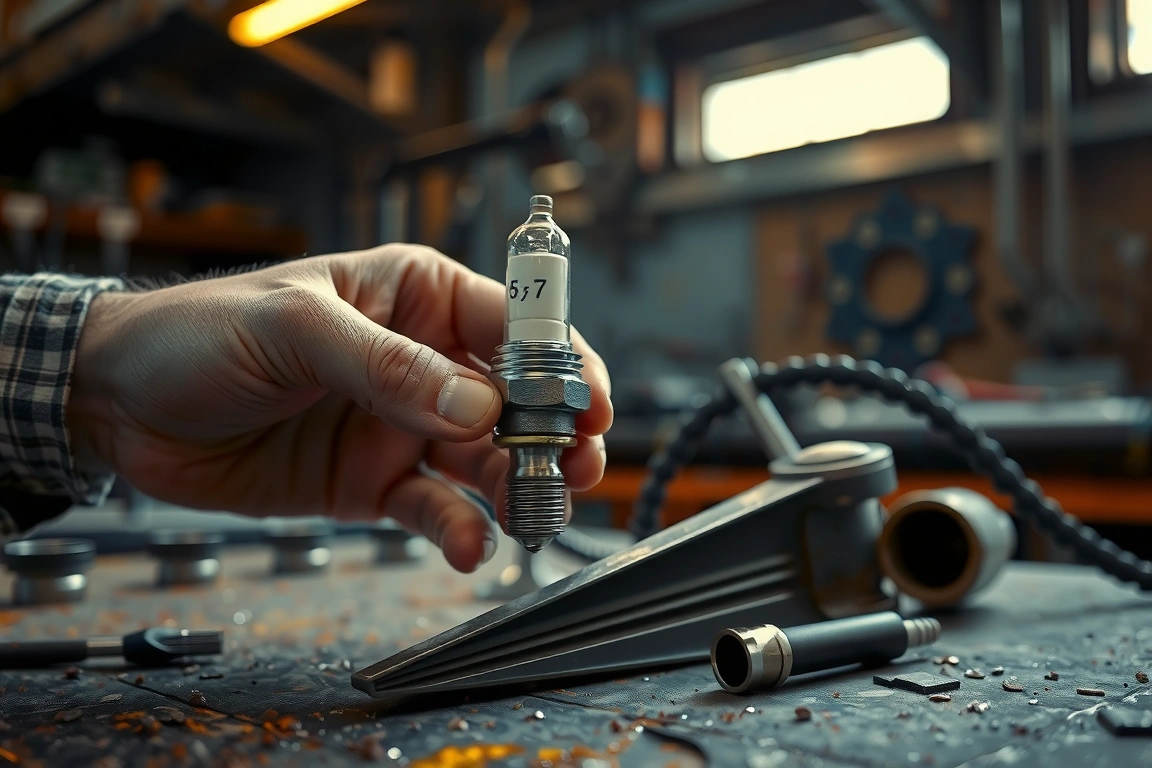
It’s a violent, controlled explosion happening hundreds of times per minute, and every sensor is a referee.
Getting Power to the Pavement: The Drivetrain Breakdown
The engine makes power, but the drivetrain decides what to do with it. In a rear-wheel-drive setup, power flows from the crankshaft to the transmission, down the driveshaft, through the differential, and out to the axles. The critical link is the torque converter or clutch. A worn torque converter in a 4L60E transmission will shudder around 45 MPH. A clutch disc (like a Luk 04-081) has a defined friction surface that wears 0.001″ with every hard launch. The differential is where the final gear reduction happens—a 3.73:1 ratio means the driveshaft spins 3.73 times for every axle rotation. Don’t just top off the diff fluid; use the right kind. A limited-slip differential requires a friction modifier additive (e.g., Ford XL-3 additive), or it’ll chatter around corners.
- Transmission: Converts engine speed into wheel torque. Automatic fluid life is critical—many fail because owners never change the 12 quarts of Mercon LV.
- Driveshaft/U-Joints: Transfers rotational power. A failing U-joint (Neapco 1-0150) will cause a distinct “clunk” on acceleration or deceleration.
- Differential: Allows wheels to rotate at different speeds. The pinion gear pre-load is set with a crush sleeve and is not a DIY-friendly adjustment.
The Electrical Nervous System: From Battery to Spark
Your car’s electrical system isn’t just for the radio. It’s a 12-volt DC network with a 100-amp alternator as its heart. The battery (a Group 65 like an Interstate MTP-65) provides cold cranking amps (CCA)—typically 650 CCA for a V6. The alternator (a Remy 86055) must then recharge it and power everything else, outputting between 13.5 and 14.8 volts when running. Voltage drop is the enemy. We’ve seen more no-starts caused by a corroded ground strap (often a braided cable from engine to chassis) than by bad starters. Use a multimeter: you should see less than 0.5 volts drop between the battery negative post and the engine block during cranking. The wiring harness is the nervous system, and a chafed wire against the firewall can cause a parasitic drain that kills the battery in two days.
Cooling and Lubrication: The Lifeblood Systems
An engine is a metal furnace that will weld itself together in minutes without constant cooling and oil flow. The water pump (Gates 42134) is a centrifugal impeller driven by the serpentine belt. It circulates coolant at a rate of 20+ gallons per minute. The thermostat (Motorad 414192) is a wax-pellet valve that opens around 195°F. The real workhorse is the oil pump, a gerotor-style unit in most modern engines that can generate 60+ PSI of oil pressure. The oil doesn’t just lubricate; it cleans (detergents in the formula), cools (carrying heat away from bearings), and seals (between piston rings and cylinder walls). Using the wrong viscosity—like 5W-30 instead of the specified 0W-20—can reduce fuel economy by 2% and delay critical oil flow on a cold morning start.
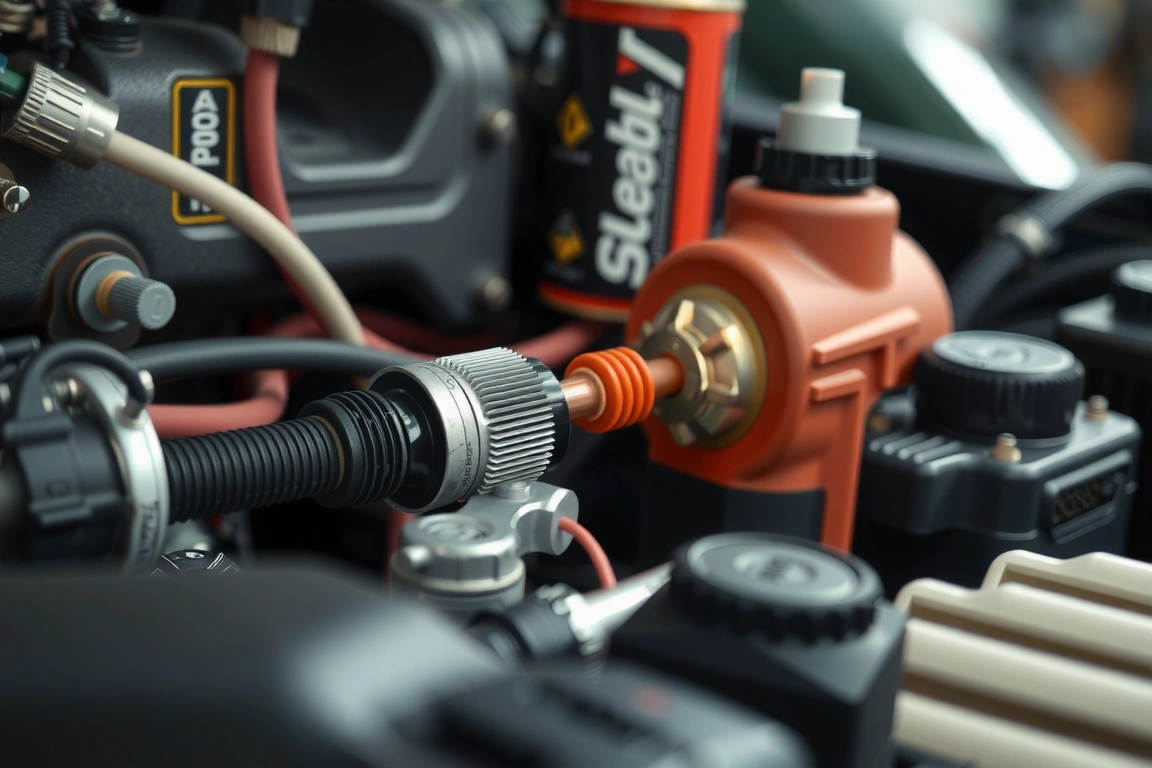
Using the wrong viscosity—like 5W-30 instead of the specified 0W-20—can reduce fuel economy by 2% and delay critical oil flow on a cold morning start.
Steering, Suspension, and Brakes: The Control Trio
Power steering, brakes, and suspension are about translating your input into controlled vehicle motion. Rack-and-pinion steering uses a hydraulic pump (Saginaw-style) or an electric motor to reduce steering effort. The tie rod ends (Moog ES2078S) are ball joints that wear out—check for play by having a helper wiggle the wheel while you feel the joint. Struts and shocks (KYB 334492) dampen spring oscillation; a blown shock means the tire can’t maintain consistent contact with the road. Brakes are a simple hydraulic multiplier: your foot applies 50 lbs of force on the pedal, and the master cylinder/booster system delivers 500+ lbs of clamping force at the caliper. The most common mistake here is re-using old brake fluid. It absorbs moisture and boils, leading to a spongy pedal. Flush it every two years with DOT 4 fluid.
Common Failure Points and the “While You’re In There” Jobs
Proactive maintenance is about combining jobs to save on labor. If you’re replacing a serpentine belt idler pulley (Dayco 89007), the belt tensioner (Gates 38132) is right there and often fails 10,000 miles later. When doing a valve cover gasket (Fel-Pro VS50569R), replace the spark plug tube seals at the same time—they’re usually part of the same gasket set. Doing a water pump? The thermostat housing gasket and drive belt are already off; replace them. For a timing belt job, the water pump is driven by the belt, so it’s mandatory. Here’s a quick table of common pairings:
| Primary Job | “While You’re In There” Job | OEM Part Example | Torque Spec |
|---|---|---|---|
| Front Brake Pads | Brake Rotors & Fluid Flush | ACDelco 18A2849A (Rotor) | Caliper Bracket Bolts: 85 ft-lbs |
| Lower Control Arm | Ball Joint & Sway Bar Link | Moog K500209 (Ball Joint) | Ball Joint Nut: 55 ft-lbs + cotter pin |
| Oil Pan Gasket | Oil Pump Pickup Tube O-Ring | Fel-Pro OS34508R (Gasket Set) | Oil Pan Bolts: 18 ft-lbs (in sequence) |
| Spark Plugs | Ignition Coils & Boots | NGK 96621 (Plug) / Standard Motor Products LX323 (Coil) | Spark Plugs: 18 ft-lbs |
OEM vs. Aftermarket: When to Pay for the Logo
The “genuine” parts counter will bankrupt you, but sometimes it’s the only smart choice. For engine sensors—crankshaft position, camshaft position, oxygen sensors—stick with OEM or top-tier aftermarket like Bosch or Denso. A cheap no-name O2 sensor will give lazy readings and trash your fuel economy. For gaskets, Fel-Pro PermaDryPlus kits are often better than the factory cork or rubber pieces. For suspension, Moog Problem Solver line includes grease fittings the OEM parts deleted. But for critical timing components? Don’t gamble. Use an Aisin timing kit (TCK304) for a Toyota, not a generic brand. Aisin is the company that made the original part for Toyota. The rule: if its failure strands you or destroys the engine, buy OEM or the OE manufacturer. For everything else, quality aftermarket is your friend.
Torque Specs: Your Wrench’s Best Friend
Guessing torque is how you strip aluminum threads or have a wheel fall off. Aluminum engine parts require precise, often lower, torque values. Here are the specs you’ll actually use, verified from factory service manuals:
| Component | Typical Size | Torque (ft-lbs) | Notes |
|---|---|---|---|
| Oil Drain Plug | 14mm or 15mm | 18-25 ft-lbs | Use a new crush washer every time. 14 ft-lbs for many Hondas. |
| Spark Plugs | 14mm or 16mm | 15-22 ft-lbs | Hand-tight, then 1/16 to 1/4 turn with a torque wrench. |
| Lug Nuts | 19mm, 21mm, 22mm | 80-100 ft-lbs | Check your owner’s manual! Use a star pattern. |
| Valve Cover Bolts | 8mm or 10mm | 8-12 ft-lbs (INCH-lbs often) | Overtightening cracks the cover. Sequence matters. |
| Cylinder Head Bolts | M11 or M12 | Multi-stage (e.g., 30 ft-lbs, +90°, +90°) | Follow the exact factory sequence and angle-turn specs. |
When to Call a Professional
Knowing your limits saves your car and your wallet. Call a pro for internal engine work (like piston rings or crankshaft bearings), advanced transmission repairs (valve body or clutch pack replacement), and airbag system diagnostics. Modern safety and emissions systems require specialized scan tools. If a job requires pulling the engine or transmission, renting a hoist and engine stand is doable, but you need a solid two days and a helper. If you’re facing a check engine light for a catalytic converter efficiency code (P0420), diagnosing it properly requires monitoring upstream and downstream O2 sensor data with a bi-directional scanner—often a mechanic’s job. There’s no shame in it. The best DIYers know when to write the check.
So, how does it work? It works because thousands of parts, from the 2-cent O-ring to the $900 ECM, operate within tolerances thinner than a human hair. Your job as an owner is to understand the critical systems, listen for the early warnings (that subtle whine from the alternator bearing), and intervene with the right part and the correct torque. Start with the simple jobs: oil changes, brake pads, air filters. Build your tool collection alongside your confidence. Buy a decent 3/8″ drive torque wrench—the Tekton 24335 is our pick for value. Keep a service log. The car isn’t a mystery; it’s a machine. And every machine can be understood, maintained, and repaired.
FAQ: How Does It Work?
What’s the most common mistake DIYers make when working on their car?
Overtightening fasteners, especially on aluminum components. Using a breaker bar or an impact gun on a valve cover bolt will crack the housing. You need a torque wrench for anything critical. Another major error is misdiagnosis from not using a proper OBD2 scanner—a $20 code reader just gives you the code, not the live data you need to see if a sensor is failing intermittently.
Is it worth buying OEM parts online versus from the dealer?
How do I know if a repair is within my skill level?
Ask three questions. One: Does it require specialty tools I can’t rent (like a bearing press or a spanner wrench for a pinion nut)? Two: If I get it halfway apart and get stuck, can I safely get the car to a shop? Three: Does the factory service procedure call for sealants, specific sequences, or angle-torquing? If you answer “yes” to any of these, watch three different YouTube tutorials on the exact model and year. If it still looks intimidating, start with a smaller project.
Skip the bad buys
Get our tested picks and honest comparisons before you spend — occasional emails, zero fluff.
Related from our network
Disclosure: This article may contain affiliate links. If you make a purchase through these links, we may earn a small commission at no additional cost to you. We only recommend products and services we believe will add value to our readers.
