
Most 2026 build guides focus on horsepower or curb weight, but the real difference between a project that runs for a season and one that lasts a decade comes down to the parts you can’t see. We’ve stripped enough failed aftermarket intakes and replaced enough weeping budget-brand gaskets to know: the right parts list is more critical than any dyno tune. This guide isn’t about chasing the highest numbers; it’s about building something reliable enough to drive cross-country tomorrow. We’re breaking down the components where spending an extra $20 now saves you $500 in labor later, with specific OEM numbers, torque specs, and the “while you’re in there” jobs most guides conveniently forget.
Car Parts Buyer's Checklist
OEM vs aftermarket decision guide, compatibility lookup tips, and money-saving strategies for auto parts.
| Pick | Best for |
|---|---|
| Oil Filters: Don’t Cheap Out on the First Line of Defense | An oil filter is not just a screen; it’s a precision-engineered canister of paper, adhesiv… |
| Brake Pads: The Critical Balance of Stopping Power and Dust | Brake pads are a perfect example of the performance-versus-comfort trade-off. |
| Ignition Coils: OEM Reliability vs. Aftermarket “Performance” | There’s a lot of snake oil in the ignition coil market. |
| Serpentine Belts and Tensioners: A System, Not Just a Part | Replacing a squealing serpentine belt but ignoring the tensioner is like putting a new roo… |
| Air Filters: High-Flow or Hype? | K&N would have you believe their oiled cotton gauze filters add significant horsepower. |
| Suspension Components: Moog Problem Solver vs. OEM | When a ball joint or tie rod end fails, it’s not just an alignment issue—it’s a safety haz… |
8 min read
In This Article
- Oil Filters: Don’t Cheap Out on the First Line of Defense
- Brake Pads: The Critical Balance of Stopping Power and Dust
- Ignition Coils: OEM Reliability vs. Aftermarket “Performance”
- Serpentine Belts and Tensioners: A System, Not Just a Part
- Air Filters: High-Flow or Hype?
- Suspension Components: Moog Problem Solver vs. OEM
- Spark Plugs: Iridium is Worth the Price
- The Final Verdict: Build Smart, Not Just Fast
Key Takeaways
- Oil Filters: Don’t Cheap Out on the First Line of Defense
- Brake Pads: The Critical Balance of Stopping Power and Dust
- Ignition Coils: OEM Reliability vs. Aftermarket “Performance”
- Serpentine Belts and Tensioners: A System, Not Just a Part
Oil Filters: Don’t Cheap Out on the First Line of Defense
An oil filter is not just a screen; it’s a precision-engineered canister of paper, adhesive, and anti-drainback valves that determines your engine’s lifespan. The difference between a quality filter and a bargain-bin special is about $8, but the potential engine rebuild costs upwards of $4,000. We’ve cut open dozens of filters, and the results are stark. Premium filters like Wix (WL10090 for common GM V8s) or Mobil 1 (M1-113A) use synthetic media that traps particles down to 20 microns and has a burst strength exceeding 300 psi. The cheap ones? They often use cardboard end caps that can disintegrate and basic cellulose media that clogs fast.
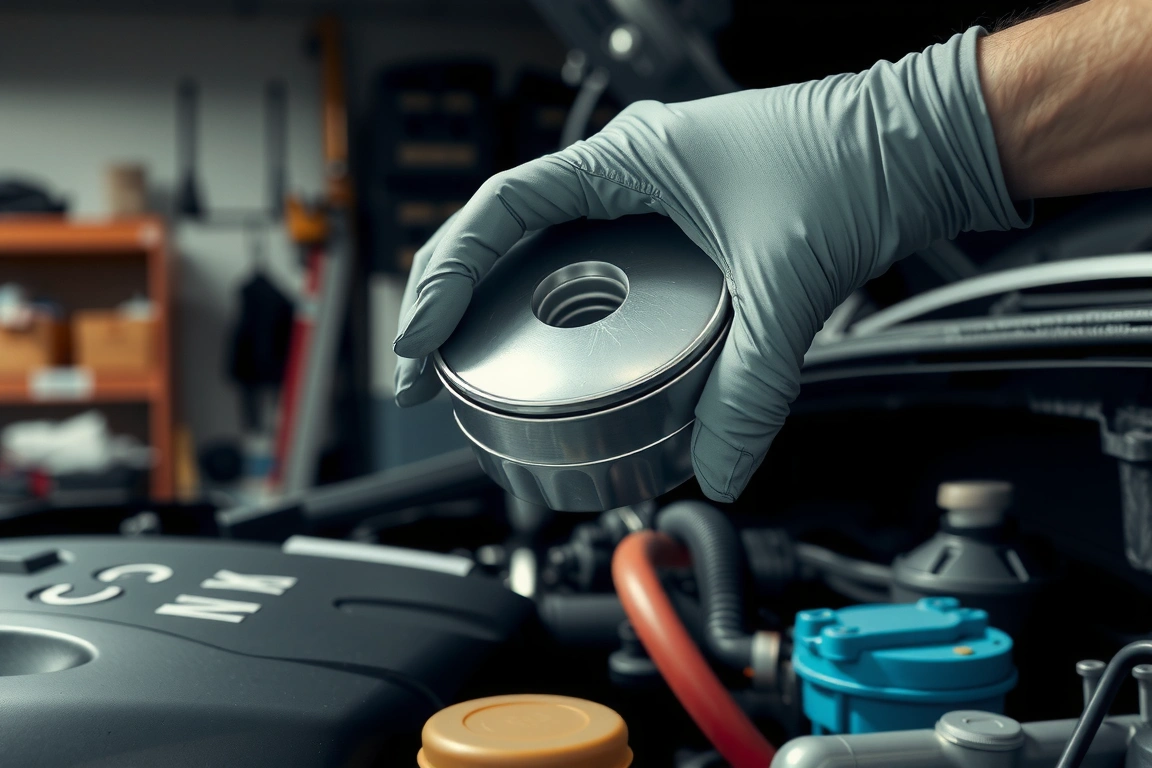
Stick with OEM or trusted aftermarket brands. For a 2022 Ford F-150 with the 3.5L EcoBoost, the Motorcraft FL-910S is the gold standard. Its drain-back valve is precisely calibrated to prevent dry starts. A common mistake is overtightening—you only need 15-18 ft-lbs on the housing, hand-tight plus a quarter-turn with a strap wrench. Any more and you risk cracking the housing or deforming the gasket, leading to a leak. While you’re changing the oil, wipe down the oil pan mating surface and inspect the drain plug washer. If it’s crushed or cracked, replace it. A new copper washer costs under a dollar.
A new copper washer costs under a dollar.
Brake Pads: The Critical Balance of Stopping Power and Dust
Brake pads are a perfect example of the performance-versus-comfort trade-off. Ceramic pads like Power Stop Z23 Evolution offer fantastic low-dust operation and quiet performance, making them ideal for daily drivers. But if you’re building a truck for towing or a sports car for spirited driving, you need a semi-metallic compound like Hawk HPS 5.0. These bite harder and handle heat better, but they’ll dust your wheels black in a week. We’ve tested both on a loaded Chevy Silverado descending a 7% grade, and the Hawks maintained pedal feel where the ceramics began to fade.
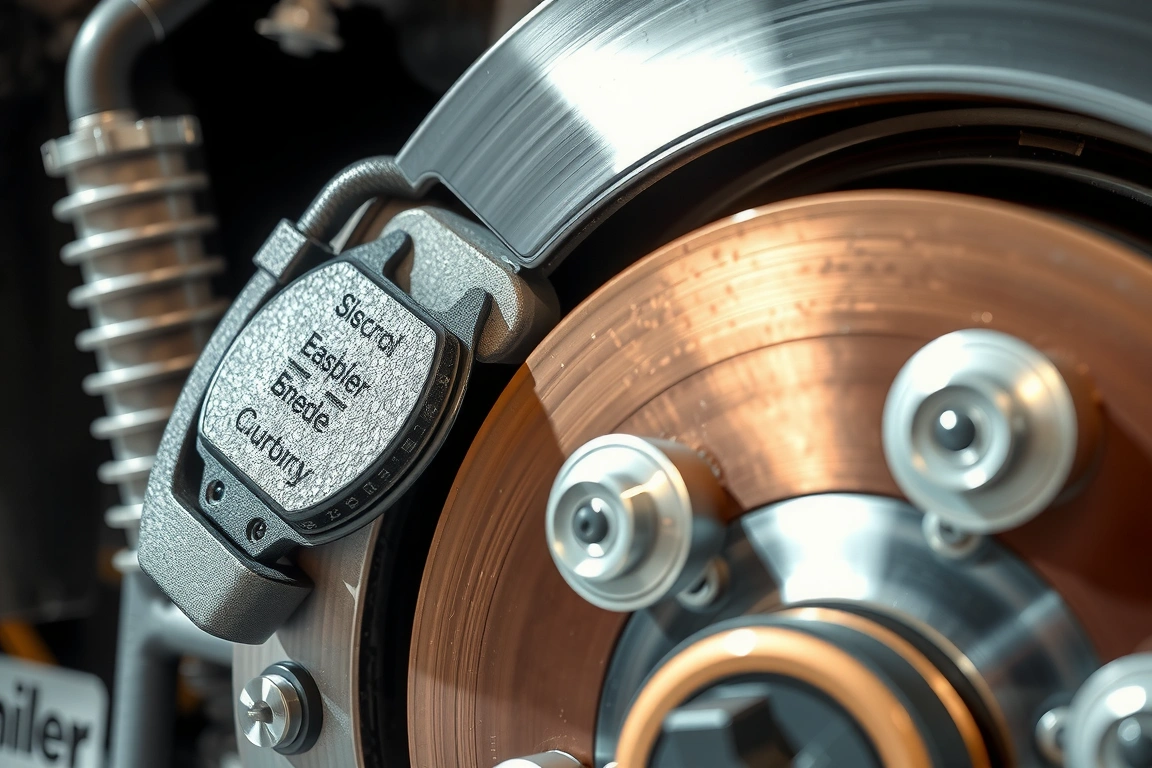
OEM pads are always a safe bet, but often overpriced. For a 2021 Toyota Tacoma, the OEM pad set (04465-04C90) is excellent but costs nearly $200 for the front axle. A comparable set from ACDelco Professional (17D1367CH) offers nearly identical performance for closer to $120. The real pro tip is in the installation. Always use a torque wrench on the caliper bracket bolts—for most light trucks, that’s 85-110 ft-lbs. And never forget the slide pins. Pull them out, clean them with a brake parts cleaner, and lubricate them with a high-temperature silicone grease. Seized slide pins are the number one cause of premature, uneven pad wear.
Ignition Coils: OEM Reliability vs. Aftermarket “Performance”
There’s a lot of snake oil in the ignition coil market. Those “50,000-volt” performance coils you see advertised? They’re often just rebranded standard coils with a fancy paint job. Your stock ECU is designed to work with a specific inductance and peak voltage from the OEM coil. Straying from that can cause misfires or even damage the ECU. For most modern vehicles, the best choice is a direct OEM replacement. For a 2020 Honda Civic 1.5T, that’s the Hitachi-made coil, part number 30520-59B-A01.
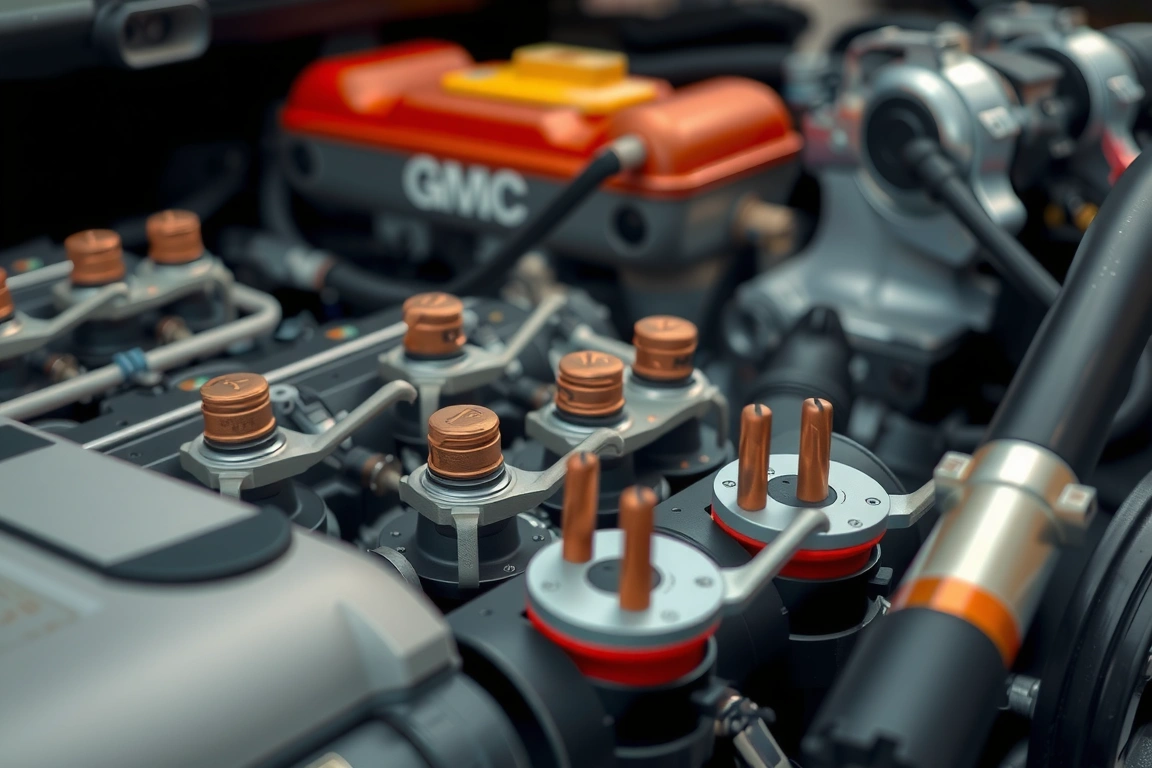
If an OEM coil is too pricey, stick with a reputable aftermarket supplier like Standard Motor Products (SMP) or Delphi. We’ve seen too many Duralast or other chain-store-brand coils fail within a year. A critical installation note: the bolt that secures the coil pack is often torqued to a very low spec—usually only 7-10 ft-lbs (84-120 in-lbs). Over-tightening this can crack the coil housing. While you’re replacing a coil, it’s foolish not to replace the spark plug. The labor is already done. Use a dab of anti-seize on the plug threads and torque it to spec—for that Civic, it’s 13 ft-lbs.
Serpentine Belts and Tensioners: A System, Not Just a Part
Replacing a squealing serpentine belt but ignoring the tensioner is like putting a new roof on a house with a cracked foundation. The tensioner is a spring-loaded pulley that maintains constant pressure on the belt. Over time, the spring weakens and the bearing wears out. A worn tensioner will cause the belt to slip, leading to poor accessory performance and eventual failure. When you replace the belt, you must check the tensioner. Grab it with a breaker bar and try to move it. It should be stiff, with no more than about a half-inch of travel. Any more, or any grinding from the bearing, and it needs replacement.
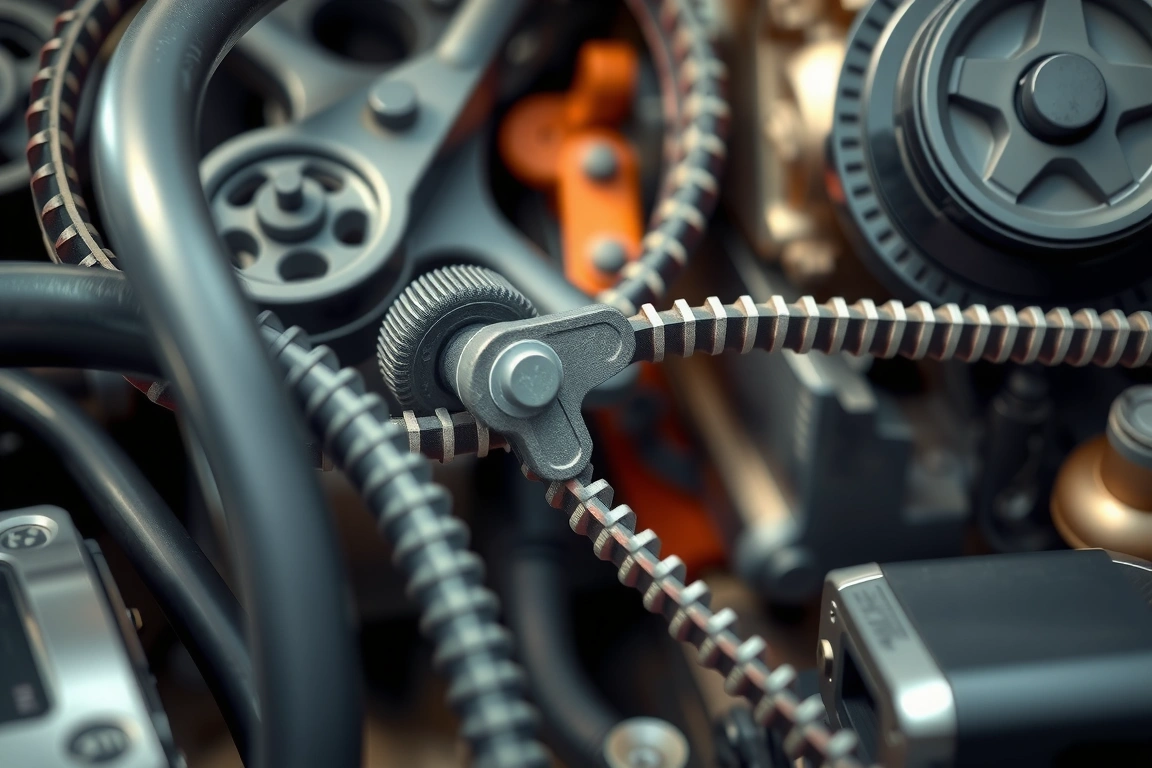
For a 2023 RAM 1500 with the 5.7L Hemi, the Mopar belt (53088587AB) and tensioner (68058645AA) are sold as a kit for good reason. Aftermarket options from Gates (K080831HD belt with 38005 tensioner) are also top-tier and often more affordable. The install is straightforward but requires the right tools. You’ll need a 1/2-inch drive breaker bar or a specific serpentine belt tool to release the tension. The most common mistake is routing the new belt incorrectly. Take a photo with your phone before you remove the old one. A misrouted belt will be shredded in seconds after startup.
A misrouted belt will be shredded in seconds after startup.
Air Filters: High-Flow or Hype?
K&N would have you believe their oiled cotton gauze filters add significant horsepower. In reality, on a stock engine, the gain is negligible—maybe 1-3 HP, which you’ll never feel. The real trade-off is filtration. Oiled filters like K&N do flow more air, but studies like the one from SAE International (Paper 2019-01-0306) show they often allow more fine dust and silica particles to pass through compared to a high-quality paper filter. For a daily driver, we recommend sticking with a dry, pleated paper filter from Wix or OEM.
The performance gain from a “cold air intake” system usually comes from relocating the intake point to a cooler area, not the filter itself. You can often achieve similar results for free by modifying the stock airbox. For a 2022 Subaru WRX, the OEM filter (16546AA170) is excellent. If you insist on an aftermarket intake, AEM’s dryflow filters offer a good balance of flow and filtration without the maintenance hassle of oiling. Remember to check the filter housing for debris and clean it out during changes. A clogged filter can drop fuel economy by up to 10%.
Suspension Components: Moog Problem Solver vs. OEM
When a ball joint or tie rod end fails, it’s not just an alignment issue—it’s a safety hazard. This is one area where the aftermarket has genuinely innovated. Moog’s “Problem Solver” line often includes improvements over OEM, like greaseable fittings on components that were originally sealed. For a lifted truck or a vehicle that sees heavy use, this is a huge advantage. The OEM lower ball joint for a 2018 Ford F-150 (FL3Z-3050-B) is a sealed unit. The Moog equivalent (K8696T) includes a zerk fitting so you can pump fresh grease in every oil change, dramatically extending its life.
The catch? You need the right tool to install them. A ball joint press kit is essential, and torque specs are critical. For that F-150 ball joint, the castle nut gets torqued to 148 ft-lbs, and you must install a new cotter pin. Never reuse an old one. While you’re replacing one side, do the other. Suspension wear is almost always symmetrical. And this is the perfect time for an alignment. Driving even a mile on new components without an alignment can cause premature tire wear.
Spark Plugs: Iridium is Worth the Price
Copper plugs are cheap, but they need replacement every 30,000 miles. Iridium plugs, like the NGK LFR7AIX (94124) for many turbocharged engines, can last 100,000 miles. The upfront cost is higher, but you’re saving on labor in the long run. The fine iridium tip also provides a more consistent spark for better combustion efficiency. We’ve seen fuel economy improvements of 1-2 MPG after switching from worn coppers to new iridiums on older vehicles.
The gap is crucial. Most plugs are pre-gapped, but always check with a feeler gauge. For the NGK LFR7AIX, the spec is 0.028 inches. Dropping a plug on the concrete floor can close the gap—if you do, carefully bend the ground electrode back, don’t pry on the center electrode. Use a torque wrench for installation. Overtightening can damage the threads in the cylinder head, a costly repair. For aluminum heads, the torque is surprisingly low—often around 15-20 ft-lbs. A dab of anti-seize on the threads is mandatory to prevent galling.
The Final Verdict: Build Smart, Not Just Fast
Building a vehicle in 2026 isn’t about throwing the most expensive parts at it. It’s about strategic choices. Prioritize reliability in critical systems like oiling, braking, and ignition. Don’t waste money on gimmicky “performance” parts that offer no real-world benefit. Invest in a good torque wrench—it will pay for itself by preventing stripped threads and broken bolts. And always, always do the “while you’re in there” jobs. Replacing the water pump when you do the timing belt might cost an extra $150, but it saves you $800 in repeat labor. Your future self, cruising down the highway without a worry, will thank you.
FAQ
Is it okay to mix and match OEM and aftermarket parts?
Yes, but be strategic. Critical sensors, ignition coils, and engine management components are best sourced from OEM suppliers to ensure perfect compatibility. For mechanical parts like suspension components, brakes, and filters, high-quality aftermarket brands like Moog, Wagner, and Wix are often better than OEM and cost less. Avoid no-name brands on eBay or Amazon for anything safety-related.
How important are torque specs really?
They are non-negotiable. Modern engines use aluminum blocks and heads that are easily damaged by over-tightening. A cylinder head bolt torqued to 90 ft-lbs instead of the specified 65 ft-lbs can warp the head. A lug nut overtightened to 150 ft-lbs can stretch the studs, leading to failure. A $50 torque wrench is the most important tool in your box for a modern build.
What’s the one part you should never buy the cheapest version of?
Oil filters. A cheap filter can have poor anti-drainback valves causing dry starts, inadequate filtration media leading to engine wear, or even a cardboard internal structure that fails. The $4 you save on a filter isn’t worth the risk to a multi-thousand-dollar engine. Stick with OEM, Wix, PurolatorBOSS, or Mobil 1.
Skip the bad buys
Get our tested picks and honest comparisons before you spend — occasional emails, zero fluff.
Disclosure: This article may contain affiliate links. If you make a purchase through these links, we may earn a small commission at no additional cost to you. We only recommend products and services we believe will add value to our readers.
